
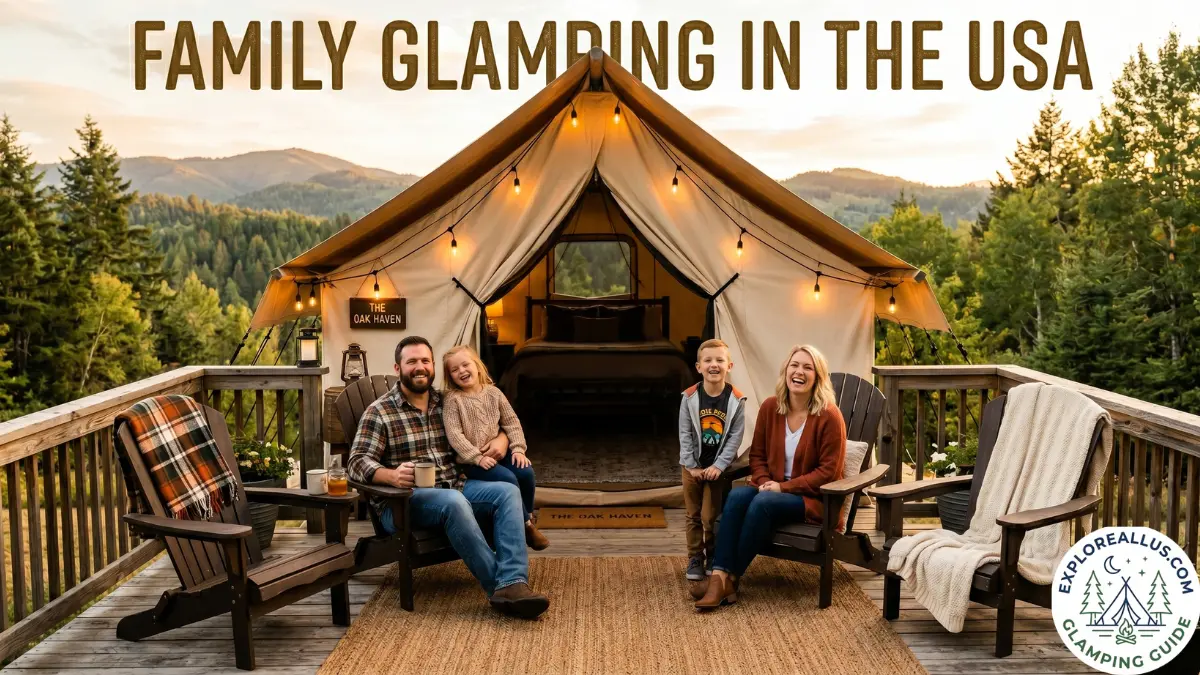
If you love the idea of camping with your kids but not the air mattress, midnight bathroom run, and wet tent, family glamping might be the sweet spot. Glamping swaps bare‑bones camping for real beds, cozy cabins or tents, and kid‑friendly amenities without losing the campfire and starry skies.
This guide walks through the best glamping structures for families and the US regions that work especially well with kids, plus tips to help you pick the right stay for your crew.
What Makes a Glamping Stay Truly Kid-Friendly
Plenty of places allow children. Fewer are actually built with families in mind.
When you’re scrolling listings, these are the green flags to look for:
- Family‑friendly sleeping setup: Multiple beds, bunks, or a loft so everyone sleeps comfortably, not all crammed into one bed.
- Easy bathroom access: A private bathroom in your unit is ideal; otherwise, check how far shared facilities are and whether they’re well-lit at night.
- Kitchen or kitchenette: A small fridge, microwave, or simple cooking area makes quick breakfasts, bottles, and snacks much easier with kids.
- Safe outdoor space: Room for kids to run around without dropping straight into a river, road, or steep drop right off the deck.
- On‑site kid amenities: Playgrounds, pools, games, trails, or simple organized activities so kids aren’t bored after an hour.
- Reviews from other families: Real parent reviews will tell you quickly if a place is “kid‑friendly” or just kids allowed at the glamping site.
You can go through our Glamping cost guide by region and structure
Kid‑Friendly Glamping Structures: Which One Fits Your Family
Different structures create very different trips. Here’s how the main options stack up for families.
1. Cabins and Cottages
Best for: First‑time glampers, babies and toddlers, bad‑weather trips.
Why families love them:
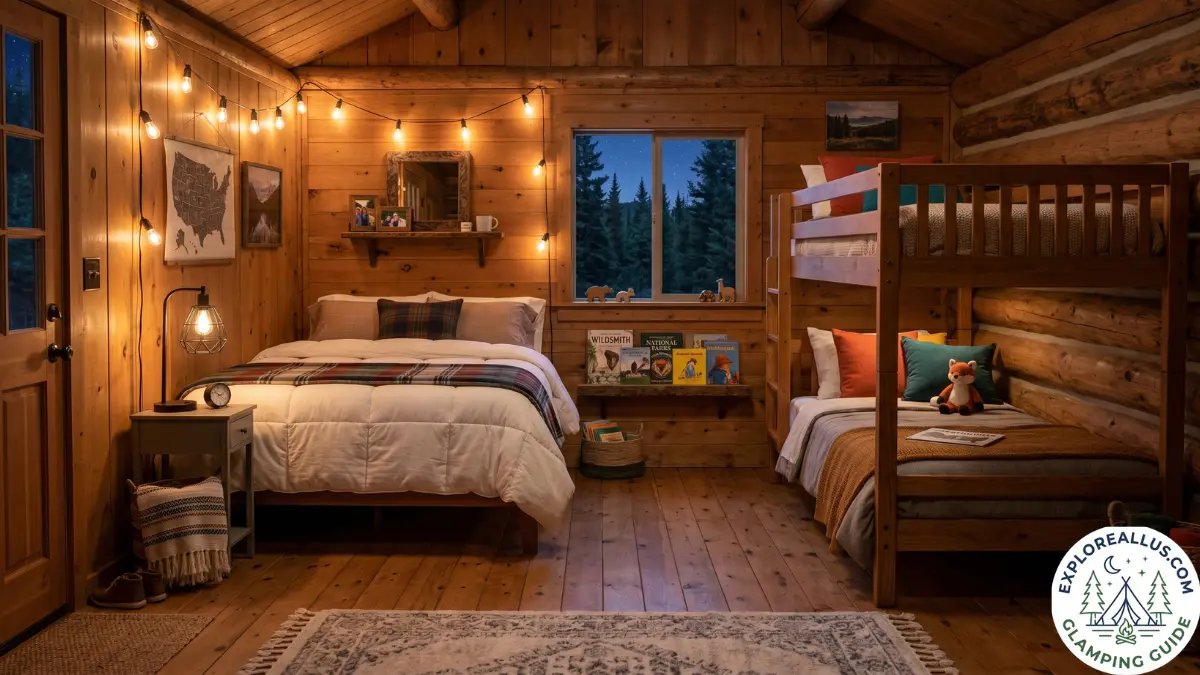
- Solid walls, proper doors and windows, and insulation.
- Often include heating/air‑conditioning, a private bathroom, and a kitchenette.
- Feel like a “tiny vacation house” instead of a tent, less stress if the weather turns.
Trade‑offs:
- Usually, the priciest option at a glamping resort.
- Less “adventurous” than tents or treehouses, which some older kids may prefer.
Cabins are a great first step into glamping if your children are very young or someone in your group really needs a guaranteed good night’s sleep.
2. Safari Tents and Wall Tents
Best for: School‑age kids and parents who want a real “camp” feel without roughing it.
What to expect:
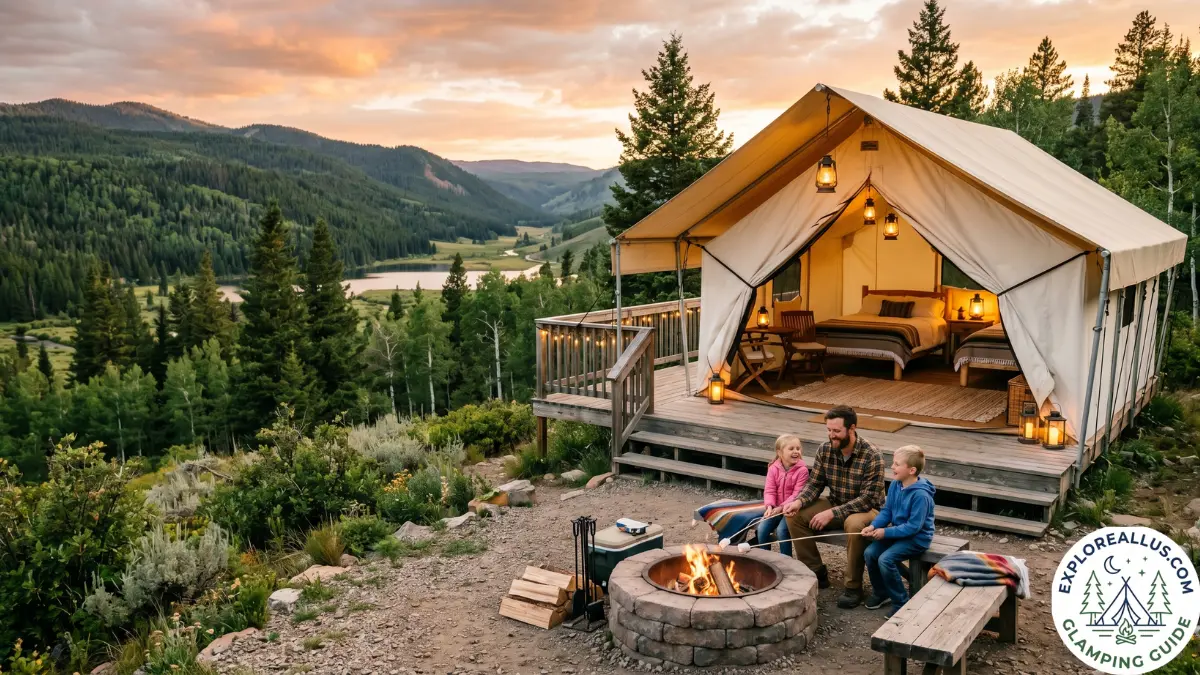
- Big canvas tents set up on wooden platforms with proper beds and real furnishings.
- Often share a bathhouse, though some higher‑end sites offer en‑suite bathrooms.
- Campfire rings, picnic tables, and common areas that encourage time outdoors.
What to watch for:
- Canvas walls don’t block sound well (both noise from neighbors and nighttime forest sounds).
- Temperature swings are more noticeable; heating and fans require a bit of supervision with kids.
These work beautifully for kids who are excited about “sleeping in a tent” but parents who still want actual beds and easy access to bathrooms.
3. Yurts
Best for: Families who like cozy, slightly quirky stays.
Why they work:
- Round structures with high ceilings, often insulated and sometimes heated.
- Many yurts in the US come with real beds and basic furniture, but some add kitchenettes or bathrooms.
- Feel more like a solid room than a tent, but still have a very “outdoorsy” vibe.
Potential downsides:
- Sound travels easily inside, and layouts are usually open plan.
- Privacy between parents and kids is limited unless the yurt is large or cleverly divided.
Yurts are a nice middle ground if you want something more interesting than a cabin but sturdier than a tent.
4. Geodesic Domes
Best for: Families with older kids and teens who love Instagram‑worthy stays.
Why kids get excited:
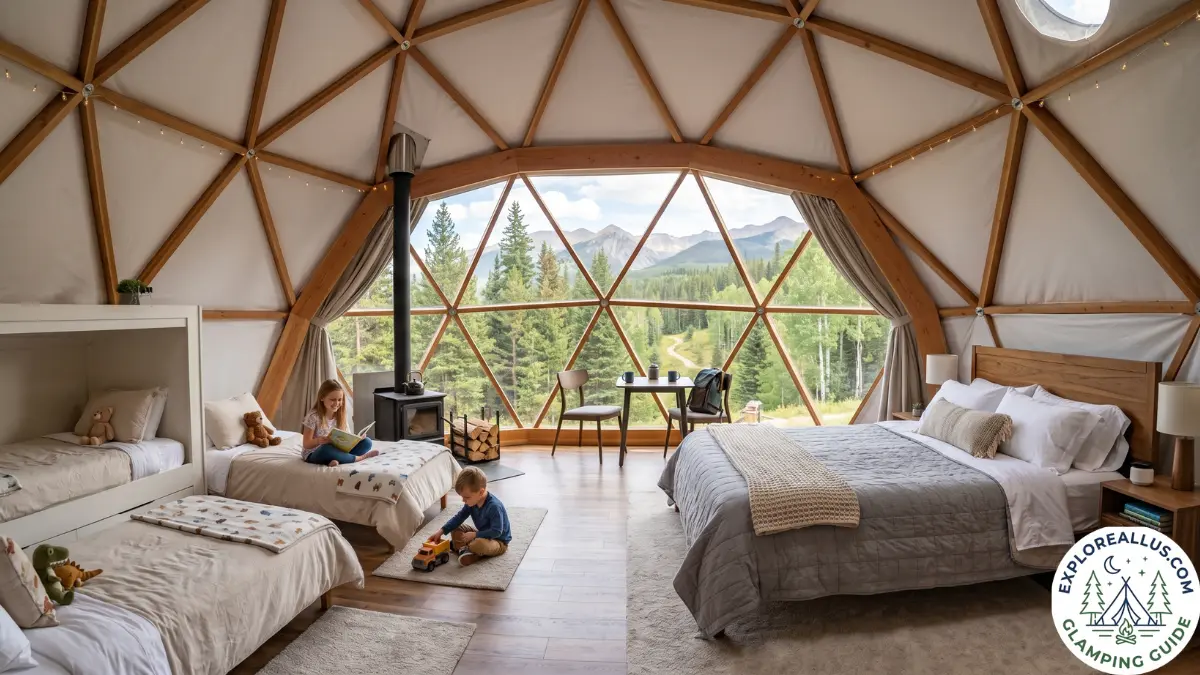
- Big windows or skylights for stargazing and bright interiors.
- Many family domes are set up with multiple beds or a small loft.
- They look futuristic and different from anything at home.
Things to check:
- Loft ladders and railings are they safe for your child’s age?
- Window coverings and ventilation are very important because domes can heat up or cool down quickly.
Domes can feel magical for kids, but parents of toddlers will want to be very sure about safety features before booking.
5. Treehouses
Best for: Short, special‑occasion stays with school‑age kids or teens.
What makes them special:
- High “wow” factor: elevated decks in the trees, fun bridges, and unique layouts.
- Great for birthdays, first‑day‑of‑summer trips, or surprise weekends.
- Often paired with pretty views or forest settings.
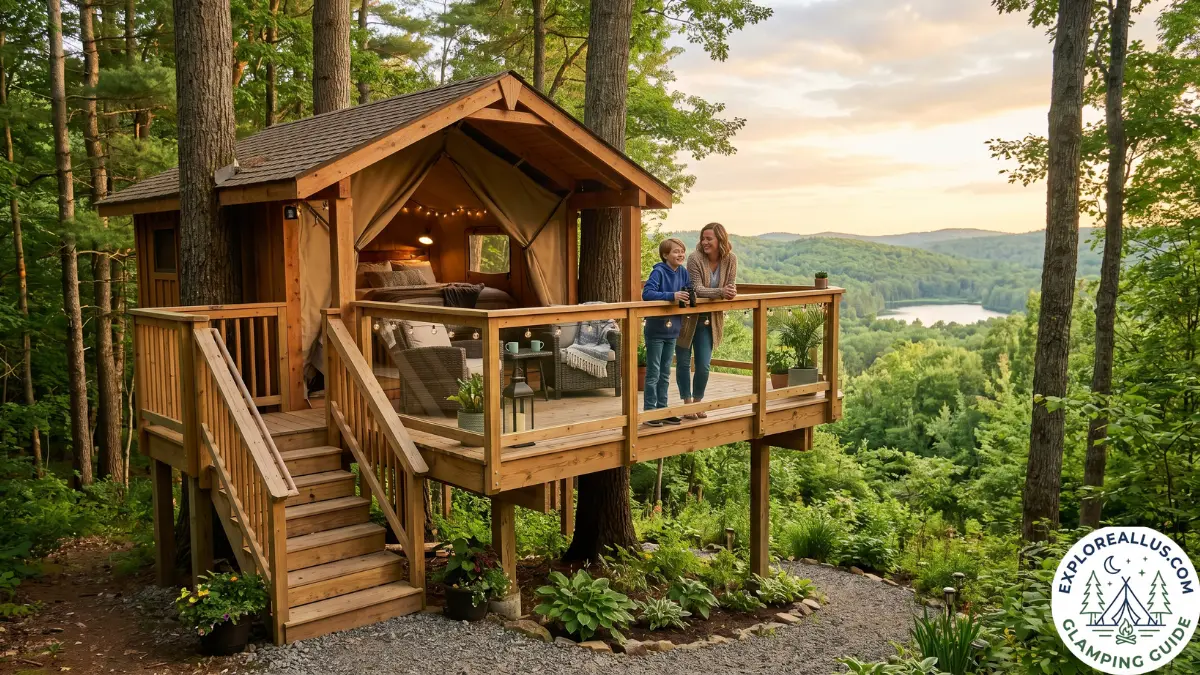
Before you go:
- Check photos for railings, gates, and stairs. Steep or open staircases can be stressful with toddlers.
- Confirm whether there’s a bathroom in the unit or if you’ll be doing night walks to a bathhouse.
If your kids are steady on their feet and understand basic safety rules, a treehouse can be unforgettable.
6. Covered Wagons and Themed Units
Best for: Imaginative kids, quick weekends, and resort‑style stays.
Why they’re fun:
- Many wagon‑style units in North America sleep 4–6 and feel like stepping into a storybook.
- Resorts that offer wagons usually layer on playgrounds, games, tents, and big shared outdoor spaces.
What to keep in mind:
- Limited headroom and floor space; better for short visits than week‑long stays.
- Bathrooms may be in a separate building.
If your child loves pretending they’re on the Oregon Trail or just likes unique sleeping quarters, wagons are a big hit.
How to Match Structures to Your Kids’ Ages
Choosing the right glamping structure for your kids’ ages can make the difference between a stressful trip and a relaxing family getaway.
Babies and Toddlers (0–3 Years)
Priorities: safety, temperature control, and easy nighttime routines.
- Choose cabins or solid cottages with a private bathroom so you can do late‑night diaper changes and baths without going outside.
- Make sure there’s space for a travel crib or bed rail if needed.
- Avoid steep stairs, open lofts, and high decks without secure railings.
At this stage, “boring but easy” usually wins over “cool photo but stressful stay.”
School‑Age Kids (4–11 Years)
Priorities: adventure, play space, and simple rules they can follow.
Great fits:
- Safari tents, yurts, and domes with multiple beds or bunks.
- Treehouses with good railings and sensible stairs.
- Resorts with playgrounds, fields, and games tents where kids can roam under supervision.
This age group loves roasting marshmallows, exploring the grounds, and sleeping “somewhere cool”—you just need basic safety boundaries and solid site rules.
Teens (12+ Years)
Priorities: independence, Wi‑Fi (sometimes), and real adventure nearby.
Look for:
- Larger tents or cabins with separate beds or even side‑by‑side units for older teens.
- Locations near national parks, lakes, or adventure hubs for hiking, paddling, rafting, or ziplining.
- Resorts with pools, game rooms, or organized excursions so teens aren’t stuck sitting around a campsite.
For teens, the region and activities matter as much as the structure itself. And you can check a family-friendly glamping resort in North America.
Best US Regions for Family Glamping
You can find glamping across the country, but some regions stand out for families because of scenery, access, and activities.
1. Western USA: National Parks and Big Landscapes
Think: Yellowstone, Grand Teton, Zion, Grand Canyon, Glacier, and the red rock deserts of Utah.
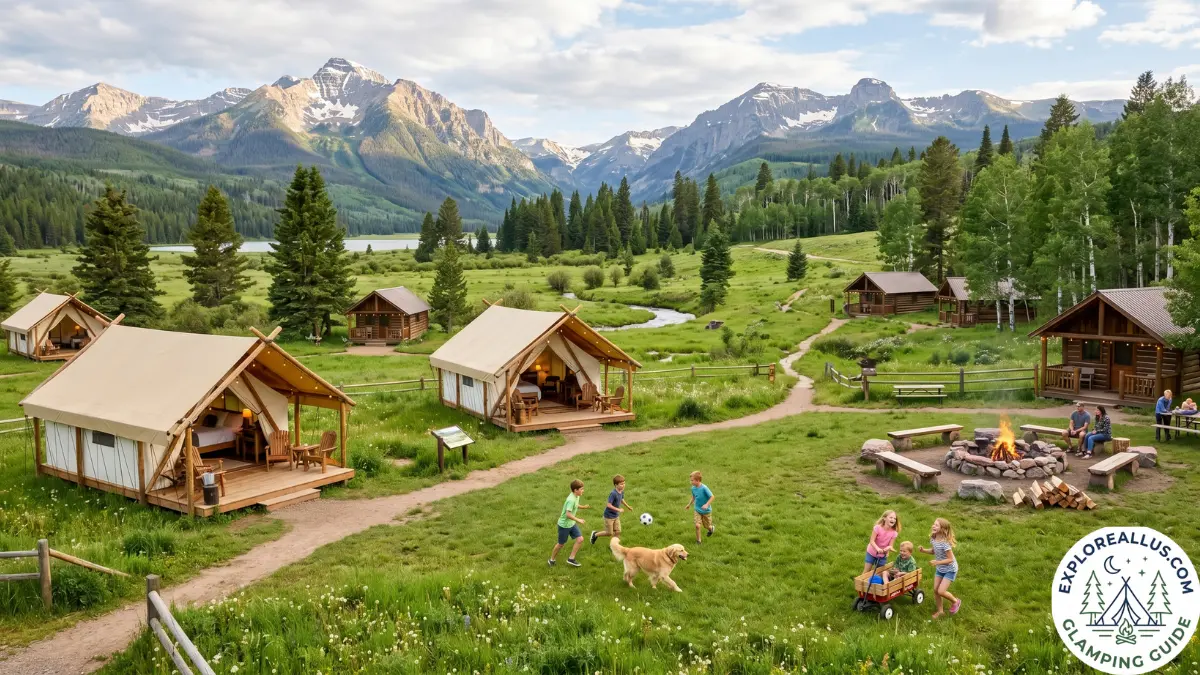
Why families love it:
- Many glamping sites sit just outside national park entrances, with canvas tents or cabins plus on‑site dining.
- Brands like Under Canvas operate multiple park‑adjacent camps with safari‑style tents, campfire circles, and optional guided activities that work well for families.
- Days can be filled with hikes, scenic drives, and ranger programs, then evenings are all about s’mores and stargazing.
Best for school‑age kids and teens who can handle longer drives and more active days.
2. Eastern USA: Forests, Lakes, and Easy Weekend Trips
Think: Upstate New York, New England, the Appalachians, and forested lake regions.
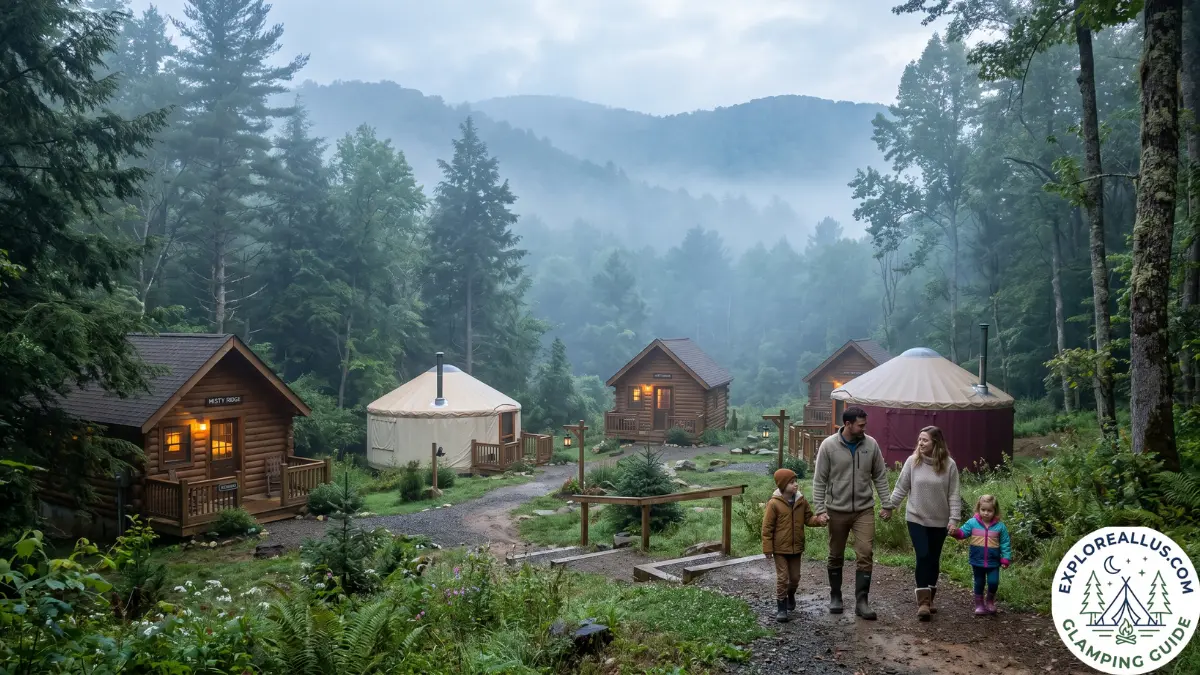
Why it works for families:
- Many sites are within a reasonable drive of major cities like New York, Boston, and Washington, D.C., making weekend trips realistic.
- Common options include cabins, yurts, and tents around lakes and in forests, often with swimming, paddling, or simple hiking nearby.
- Some properties near cities even offer island or waterfront stays accessible by short ferry rides, which kids find memorable.
The East is especially good for younger kids because travel time is shorter and the weather is milder outside of peak winter.
3. Southern USA: Long Seasons and Resort‑Style Fun
Think: Smoky Mountains, Blue Ridge, Florida, and Gulf Coast areas.
Family perks:
- Longer glamping season thanks to milder shoulder‑season weather.
- Smoky Mountains–area resorts in Tennessee and North Carolina offer tiny homes, canvas tents, and cabins near Pigeon Forge, Sevierville, and national park gateways.
- Many southern glamping resorts feature zero‑depth entry pools, hot tubs, playgrounds, sports courts, and bathhouses, which are hugely appealing with kids.
Great choice if you want nature plus tourist‑town attractions, water parks, or theme parks.
4. Midwest & Mountain States: Lakes, Ranches, and Quiet Escapes
Think: Great Lakes states, Colorado, Montana, Wyoming.
Why families choose them:
- Lakeside glamping with cabins, tents, or domes gives kids easy access to swimming, fishing, and paddling.
- Ranch‑style stays in Montana and Wyoming may combine glamping tents or cabins with horseback riding, lawn games, and family‑style meals.
- These spots often feel quieter and less crowded than the biggest national park gates, making them good for extended family trips or reunions.
If your family likes slower mornings, camp games, and evenings around a fire more than packed sightseeing days, this style of region fits well.
Practical Tips for a Smooth Family Glamping Trip
A few small decisions can make the difference between “never again” and “when can we come back?”
- For your first trip, keep it easy: Start with a cabin or well‑equipped tent in a region close to home so you can see how your kids do with outdoor sleep and bathroom runs.
- Choose season and region around your kids, not your Instagram feed: If they melt down in heat or hate bugs, avoid midsummer in very hot or buggy areas and aim for shoulder seasons in mild climates instead.
- Pack a comfort kit: Familiar pillow or blanket, bedtime toy, nightlight, and a couple of small games or books for downtime and rainy spells.
- Set safety rules on day one: Explain where they can and can’t go alone, how to behave around fire pits, and what to do if they see wildlife or get separated.
- Plan downtime at the site: Don’t overbook every day with activities, leave space for hanging out at the playground, swimming, or just playing near your unit, so everyone can actually relax.
When you match the right structure and region to your children’s ages and temperaments, family glamping becomes a low‑stress way to enjoy nature together with enough comfort that parents get a break too.
FAQs
Is glamping suitable for young kids and toddlers?
Yes, glamping can be great for toddlers if you pick the right structure. Cabins or solid cottages with private bathrooms and good temperature control are usually the easiest and safest option for very young children.
How many nights are ideal for a first family glamping trip?
For a first trip, 2–3 nights is usually enough to feel like a real getaway without overwhelming kids (or parents). Once you know how your family handles the structure, location, and routines, you can plan longer stays.
Which glamping structures are best for families with kids?
Cabins and cottages are usually the most practical, followed by large safari tents, yurts, and domes that have multiple beds and safe layouts. Treehouses and wagons are fun for older kids but may be less suitable for toddlers because of stairs, height, or tight spaces.
Are pets allowed at family glamping sites?
Policies vary. Some glamping stays welcome pets, some only allow dogs in certain units, and others don’t allow pets at all. Always check the pet policy, extra fees, and any rules about leashes, cleaning, and leaving pets unattended before you book.
What if the weather turns bad during our glamping trip?
Check the cancellation policy before you book and always have a “rainy day” plan: board games, books, short drives to nearby towns or indoor attractions, and extra layers. Solid structures like cabins or well‑built tents with heat make bad weather much easier to handle with kids.