
If you walked onto a glamping site today, one structure would instantly grab your eye and hold it: the geodesic dome. Striking, futuristic, and seemingly dropped into the wilderness from a sci-fi set, the dome has quickly claimed the crown as the undisputed king of luxury outdoor accommodations.
But why are these geometric spheres completely dominating the glamping industry? Is it just because they look great on Instagram, or is there some serious structural magic going on?
Let’s unpack why geodesic domes have earned their crown, what they feel like from the inside, and why they offer the absolute best balance of wild nature and high-end luxury.
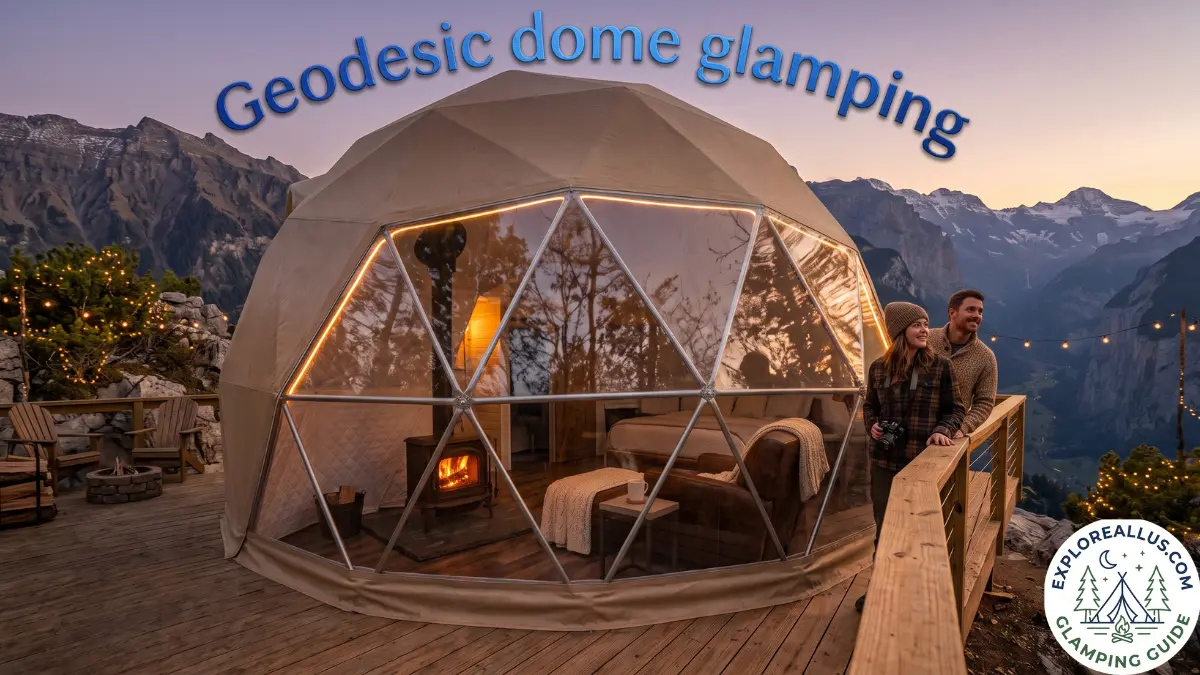
The Shape of a Geodesic Dome: Engineering Meets Luxury
To understand why domes are so successful, you have to look at the math specifically, the work of legendary architect R. Buckminster Fuller, who popularized the geodesic dome in the mid-20th century.
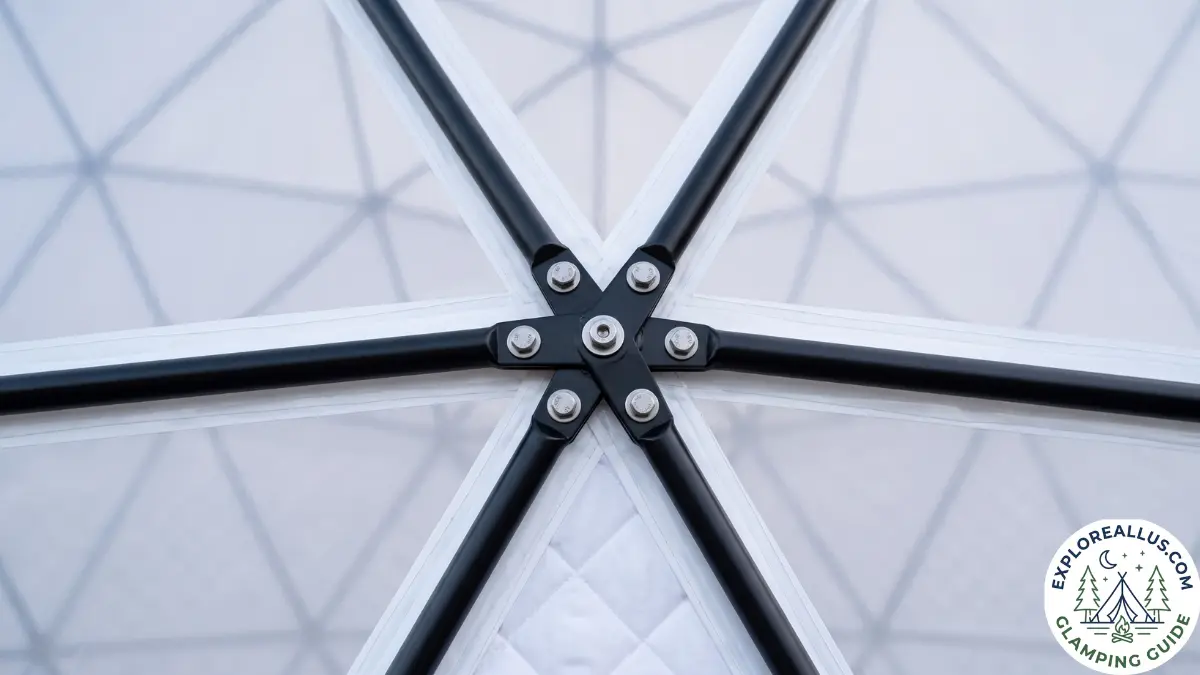
A geodesic dome is a hemispherical structure made from a network of interlocking triangles. In the structural world, triangles are the ultimate shape because they don’t deform under pressure.
Unmatched Strength: Because of this triangular grid, weight and stress are distributed completely evenly across the entire frame. Domes don’t have a single weak point. They can withstand hurricane-force winds, heavy mountain snow loads, and torrential downpours that would snap a traditional canvas safari tent like a twig.
Zero Internal Pillars: Because the structure is entirely self-supporting, a dome requires no internal support pillars or load-bearing walls. When you step inside, you are greeted by a massive, soaring, uninterrupted vault of space.
Weatherproof Luxury: True Four-Season Comfort
Standard camping is entirely dependent on the weather. If it’s too hot, you bake; if it’s too cold, you freeze. Even luxury safari tents struggle when the temperature plunges or spikes. Domes handle the elements beautifully due to two factors: natural airflow and high-tech insulation.
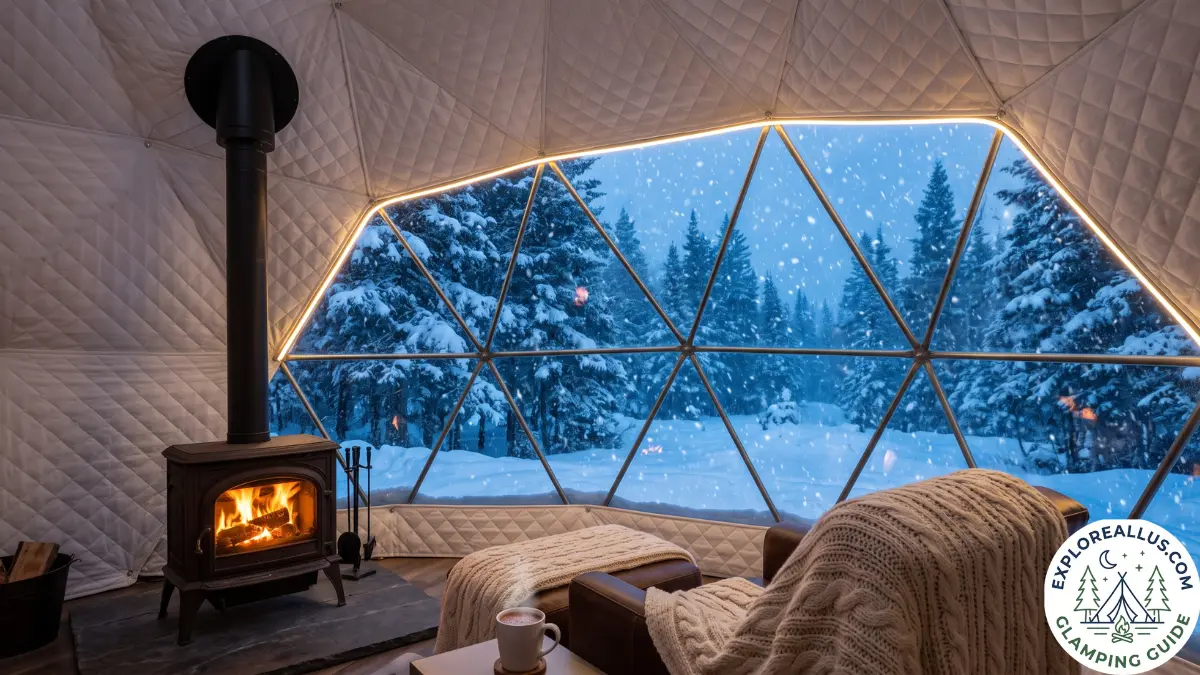
The Natural Convection Core
Because a dome is spherical, it has roughly 30% less surface area than a conventional rectangular building with the same floor space. Less surface area means less exposure to the outside climate. Air flows continuously in a natural, circular pattern inside a dome, preventing stagnant cold or hot pockets from forming.
Heavy-Duty Thermal Lining
Modern glamping domes aren’t just made of thin plastic. They utilize multi-layer insulation setups:
- Reflective Foil Barriers: Reflect up to 85% of radiant heat away from the dome during blistering summer days.
- Quilted Cotton/Oxford Liners: Provide a heavy thermal layer (often yielding an R-value equivalent up to 10.6 in the ceiling) that holds in heat effortlessly.
When you couple this insulation with a small wood-burning stove or a mini-split heat pump, a geodesic dome remains incredibly cozy whether it’s sitting in the snowy wilderness of Montana or the searing heat of the Utah desert.
There are many Trendy Glamping structures in the USA that you can check out.
The Interior Experience: Wow Factor
What truly separates the dome from yurts, tiny homes, and treehouses is the sheer atmospheric magic of the interior.
The Panoramic Window and Skylight
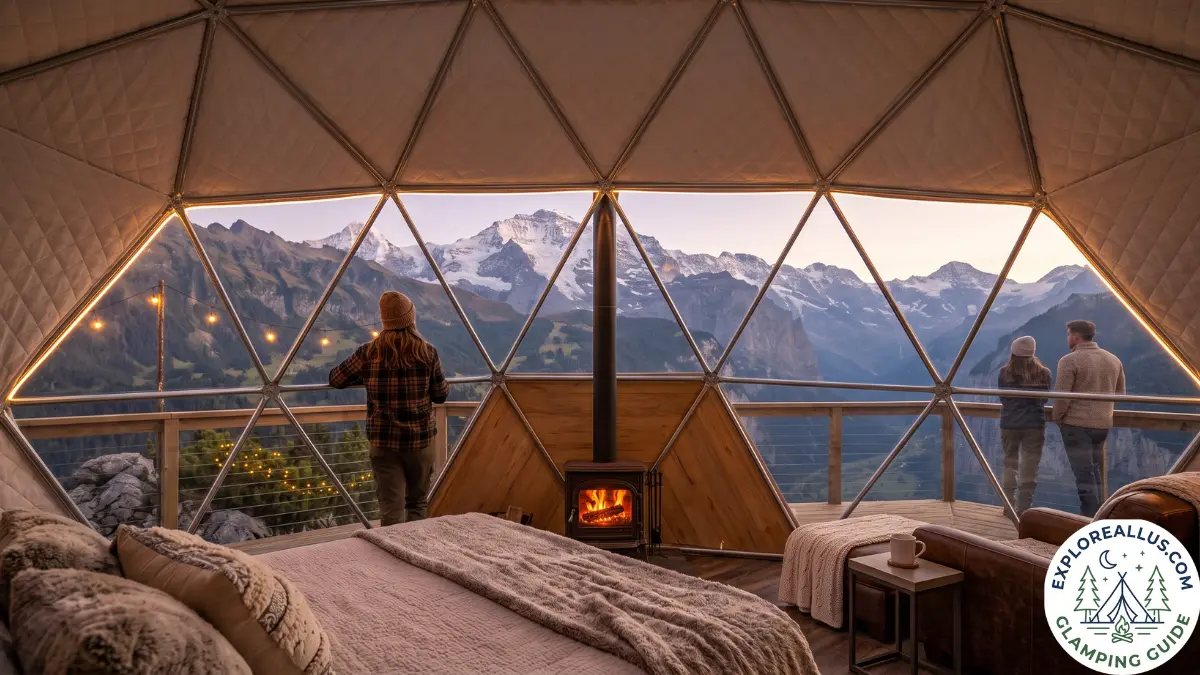
Almost every luxury glamping dome features a massive, transparent bay window cut into one side, along with a hexagonal skylight directly at the apex.
This design creates an unmatched psychological shift. You are completely sheltered from the wind, rain, and bugs, yet you have a widescreen, 180-degree view of the wilderness. You can lie in a plush, king-sized bed with high-thread-count sheets and watch the Milky Way drift across the night sky, or watch a thunderstorm roll across a valley while remaining completely warm and dry.
Complete Design Freedom
Because there are no internal walls, glamping hosts have a blank canvas to design true luxury. Domes routinely feature:
- Full-sized, spa-like bathrooms enclosed in a central wooden pod.
- Mezzanine lofts for extra sleeping space, utilizing the vertical height.
- Full kitchenettes, plush lounge seating, and indoor fireplaces.
The Sustainabiliy Edge
Today’s travelers care deeply about their environmental footprint. Domes are inherently eco-friendly structures.
Because they achieve maximum internal volume with the absolute minimum amount of building materials, they require fewer resources to construct than a traditional wooden cabin. Furthermore, because they sit beautifully on raised wooden platforms or light foundations, they cause minimal disruption to the ground beneath them. When a dome site is retired, the land can return to its natural state quickly.
The Verdict: Why the Dome Wears the Crown
While a yurt offers rustic charm and an A-frame cabin offers a classic vibe, no other structure matches the geodesic dome’s combination of structural invincibility, spatial volume, and immersive exposure to nature.
It provides exactly what the modern traveler is looking for: an unforgettable, deeply visual, all-weather escape that makes you feel like you are sleeping on the edge of the world without ever forcing you to sacrifice a hot shower or a comfortable bed.
That is why the geodesic dome isn’t just a trend. It is, and will remain, the undisputed king of glamping.
FAQs
Are geodesic domes safe during high winds and heavy storms?
They are incredibly safe. The aerodynamic shape and interlocking triangular frame allow hurricane-force winds to flow smoothly over the structure rather than slamming into flat walls, preventing collapse.
Do glamping domes get too hot or too cold?
Not if they use proper multi-layer thermal insulation. When paired with standard amenities like mini-split AC units or wood stoves, they maintain a comfortable hotel-like temperature year-round.
How do glamping domes protect your privacy?
Domes are strategically positioned to face away from walking paths, and neighboring stays toward open views. They also come equipped with heavy, custom-fitted curtains or magnetic window covers for total nighttime privacy.
Can you cook inside a geodesic glamping dome?
Many luxury domes include compact kitchenettes featuring a mini-fridge, microwave, and coffee maker. For heavy cooking, hosts usually provide outdoor setups like private gas grills or fire pits.
Do glamping domes experience problems with condensation?
Quality domes avoid this entirely by using active ventilation fans, solar-powered vents, and breathable inner liners. Their natural spherical shape also promotes continuous, uniform airflow to prevent damp air pockets.