
Imagine unzipping a heavy canvas door to reveal a king-sized plush bed, warm wooden floors, and a private rainfall shower all surrounded by the rustle of leaves and open sky. That is the magic of staying in a Safari Tent.
If you are planning a getaway and considering a safari tent, you might be wondering: Is it actually comfortable? Will I be cold? How private is it?
This guide breaks down everything you need to know about safari tent glamping so you can book your next trip with total confidence.
What Exactly Is Safari Tent Glamping?
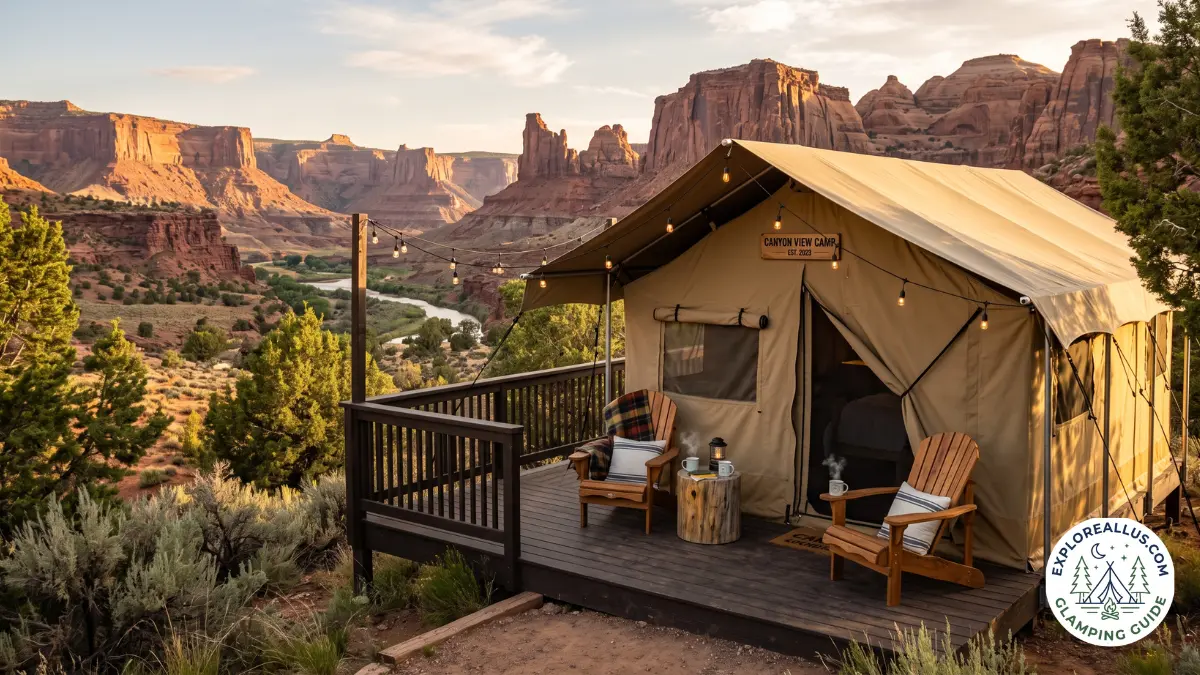
A safari tent is the undisputed king of luxury canvas accommodations. Inspired by the classic African game-lodge setups, these are high-end, semi-permanent canvas suites built on elevated wooden decks.
Unlike standard camping tents (or even smaller bell tents), safari tents feature:
- Vertical Canvas Walls: No sloping ceilings you can stand tall throughout the entire space.
- Massive Floor Plans: Ample room for real furniture, full bedroom sets, and sitting areas.
- A Heavy-Duty Wooden Foundation: Keeps you completely elevated off the damp ground.
What’s Inside? The Safari Tent Experience
While every glamping site puts its own unique spin on interior design, here is what you can typically expect when you walk in:
1. A Real Bedroom Setup
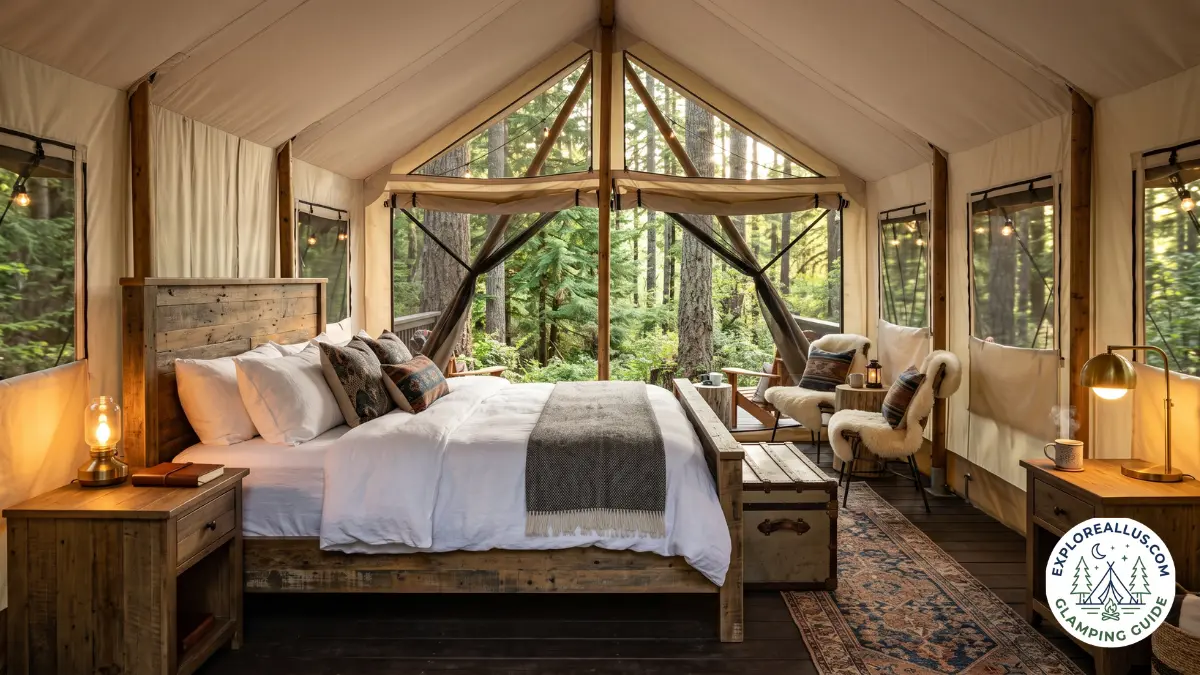
Forget air mattresses and sleeping bags. Safari tents are furnished with real bed frames, high-thread-count linens, cozy duvets, and supportive mattresses. Many larger setups feature multiple bedrooms or loft spaces, making them ideal for families or group trips.
2. Private En-Suite Bathrooms
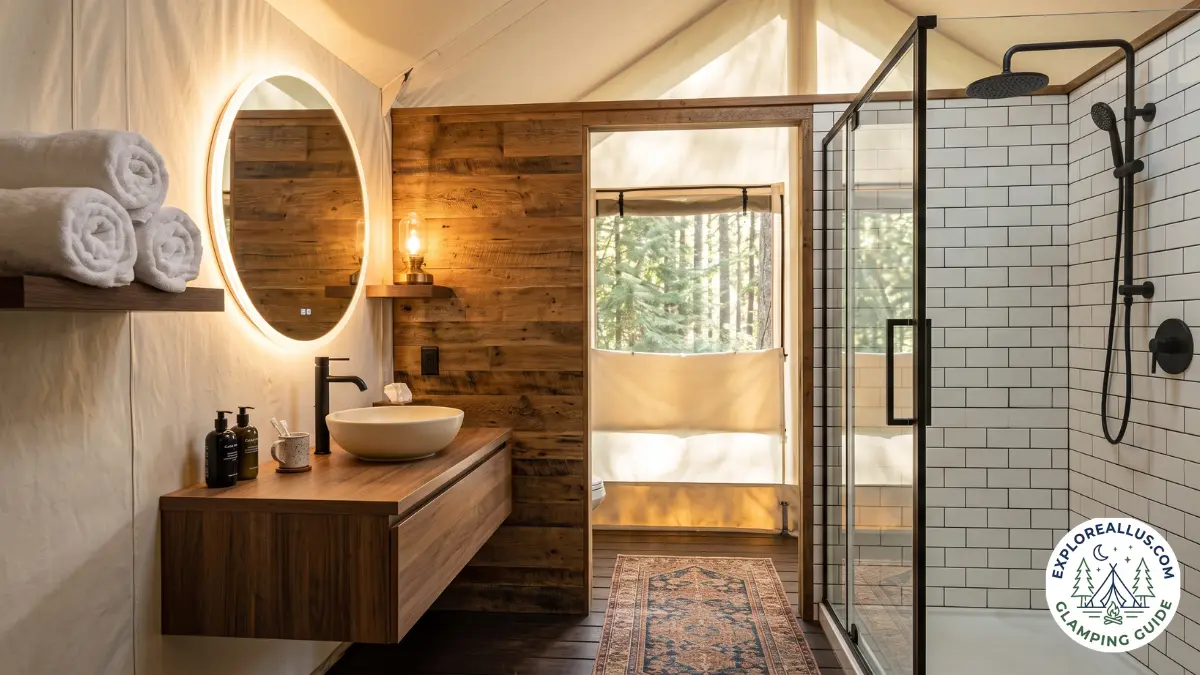
Most top-tier safari tents feature a private, fully plumbed bathroom built right inside the main tent structure. You get flushing toilets, hot running water, stylish vanities, and full-size showers no late-night walks across a pitch-black campground to a shared bathhouse.
3. Indoor Living Space
Because of their rectangular layout, safari tents fit comfortable seating like leather couches, dining tables, and small kitchenettes equipped with mini-fridges, sinks, and coffee bars.
4. The Covered Porch
The double-layer canvas roof extends over the front of the tent to create a shaded outdoor deck. It’s the ultimate spot for morning coffee, reading a book in a hammock, or enjoying an evening glass of wine.
Weather & Comfort: How Do They Handle Seasonal Shifts?
A common worry for first-time glampers is how a canvas room holds up to changing weather. Modern glamping sites design their safari tents specifically for comfort across seasons:
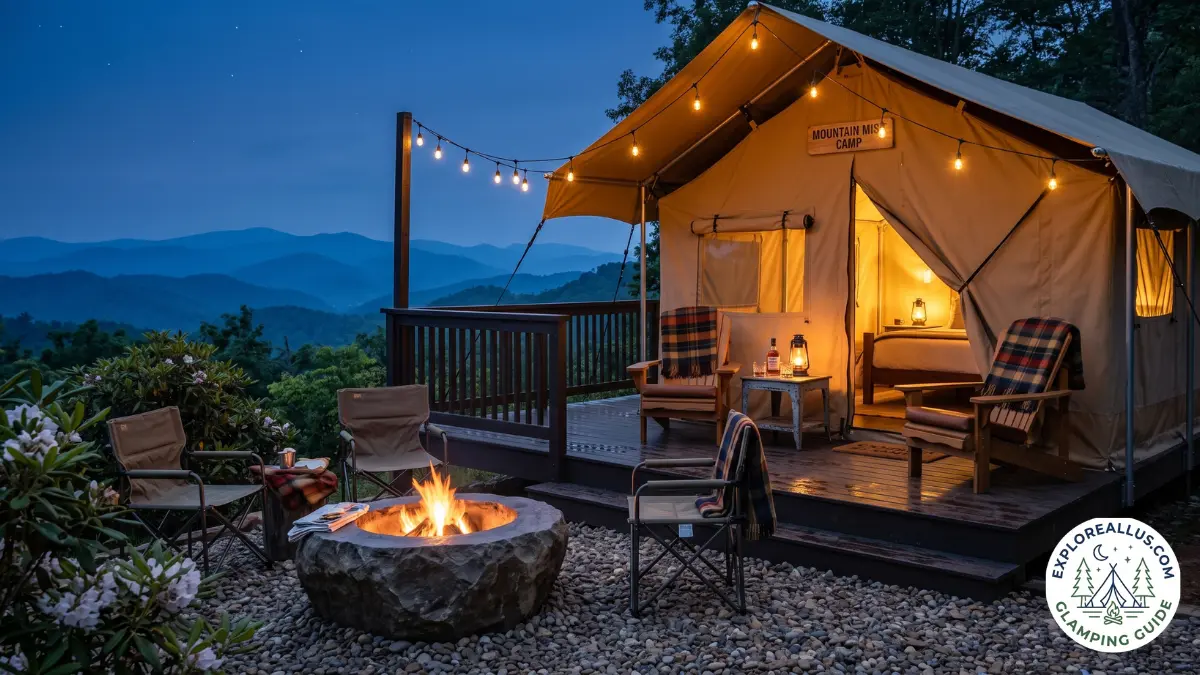
- In the Summer: Double-layer roofs block direct sunlight, while massive zip-down mesh windows create fantastic cross-ventilation. Most high-end sites also equip their tents with ceiling fans or mini-split AC units.
- In the Autumn & Winter: Safari tents use heavy, wind-resistant canvas. Indoor heat sources like wood-burning stoves, electric fireplaces, or heated blankets keep the interior warm and ambient.
- During Rain: Listening to rain tap softly against a canvas roof is one of the most relaxing parts of glamping. The outer roof fly sheds water effortlessly, keeping you completely dry inside. You can check local forecasts via the National Weather Service.
How Does a Safari Tent Compare to Other Glamping Styles?
Not all glamping accommodations offer the same balance of comfort, privacy, and livable space. Comparing layouts side-by-side makes it easy to see how safari tents stack up against popular alternatives like Geodesic domes and yurts.
| Glamping Type | Typical Price | Space | Bathroom Experience | Vibe |
| Safari Tents | $180 – $450+ | Maximum (Tall, square walls) | En-suite (Built inside) | Luxury safari lodge, Rustic elegance |
| Geodesic Dome | $200 – $500+ | Moderate (Curved walls) | Compact En-suite | Futuristic, Stargazing |
| Yurt | $120 – $300 | High (Circular, vaulted ceiling) | Attached Annex or En-suite | Traditional nomadic, Cozy earthy retreat |
What to Pack for Safari Tent Glamping: The Essential Checklist
Your tent comes with plush beds and hotel-style linens, but remember you are still sleeping under canvas in the great outdoors. Toss these essentials into your bag to keep your stay effortless, cozy, and hassle-free:
- Slip-On Camp Shoes: You’ll be bouncing between clean hardwood floors and dusty trails constantly. A pair of slip-on clogs or slides saves you from tying laces twenty times a day.
- Warm Evening Layers: Valley, desert, and forest temperatures plummet fast once the sun dips. Pack a fleece, knit beanie, and thick socks for porch lounging.
- Earplugs & Eye Mask: Nature wakes up early. If chirping birds, wind in the trees, or sunrise light filtering through canvas wake you easily, these are total lifesavers.
- Headlamp or Pocket Flashlight: Perfect for hands-free walks to the fire pit, outdoor grill, or stargazing clearings after dark.
- Portable Power Bank: Many off-grid sites rely on solar battery banks designed for low-wattage lighting rather than high-draw tech. Keep your phone and camera juiced up anywhere.
- Bug Spray & After-Bite Stick: Relaxing on your covered deck at dusk is unbeatable until mosquitoes arrive. Keep repellent handy so you can enjoy the evening bite-free.
- Insulated Water Bottle or Tumbler: Keeps ice water refreshingly cold during afternoon sun and holds hot cocoa or tea fireside at night.
FAQs about Safari Tent Glamping
Can bugs, mosquitoes, and animals get inside the tent?
Quality safari tents use tightly woven mesh screens on all windows and doors alongside sealed floor perimeters to keep pests out. Keeping the screen doors zipped shut whenever you enter or exit keeps the interior completely bug-free.
Is there electricity and Wi-Fi inside a safari tent?
Most modern resorts offer standard electrical wall outlets, ambient bedside lighting, and strong Wi-Fi throughout the tent. Remote or solar-powered retreats may limit power to USB charging ports and confine Wi-Fi access to the main guest lodge.
Are safari tents safe and lockable?
Most tents use heavy-duty zippers rather than keyed deadbolts, but top resorts provide in-room digital safes or lockboxes for valuables. Glamping properties are generally secure, gated, and staffed around the clock.
Is safari tent glamping noisy when it rains or winds?
Rain creates a soothing, rhythmic sound on the tensioned canvas roof, which most guests find relaxing. Strong winds can cause the canvas to flap gently, so packing earplugs is recommended if you are a light sleeper.
Can you cook inside a safari tent?
Open-flame cooking is strictly prohibited inside canvas tents for safety, though small kitchenettes with coffee makers and mini-fridges are common. Most sites provide private outdoor gas grills, campfire rings, or on-site restaurant dining instead.