
If you’ve spent any time scrolling through glamping platforms or browsing state park accommodations, you’ve almost certainly seen them, circular canvas shells, soaring conical ceilings, and distinct central skylights pointing straight up at the stars.
Yurts have quietly become the undisputed champion of the outdoor travel world.
While geodesic domes claim the Instagram spotlight and luxury safari tents carry steep resort price tags, yurts sit in the absolute sweet spot of glamping. They offer structural stability, high-end aesthetic charm, four-season climate resistance, and incredible value all without breaking the bank.
Whether you’re planning your very first weekend getaway or looking to swap traditional tent camping for something a little more comfortable, this ultimate guide covers everything you need to know about yurt glamping.
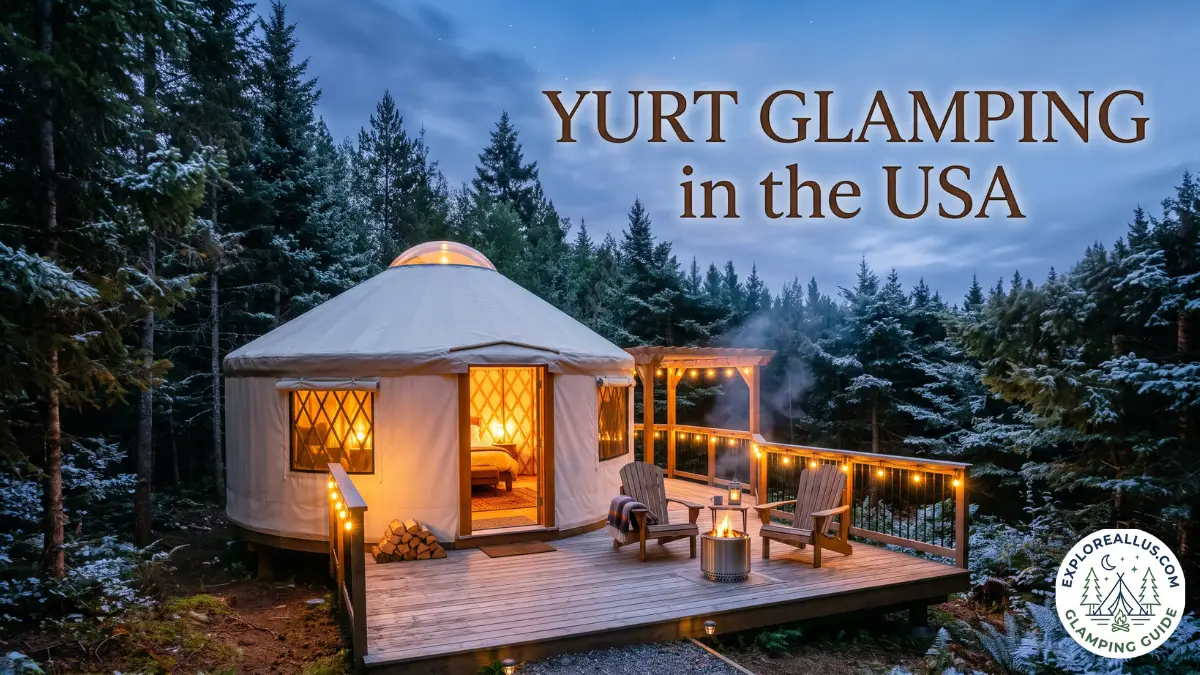
What Is a Yurt, Exactly? (Ancient History Meets Modern Comfort)
At its core, a yurt (or “ger” in traditional Mongolian) is a circular, lattice-framed structure designed for mobility, strength, and climate resilience. Used for over 3,000 years by nomadic tribes across Central Asia, traditional yurts were built with steam-bent wooden accordion walls and thick felted wool insulation to withstand howling steppe winds, freezing winters, and sweltering summer sun.
Today’s glamping yurts retain that iconic round architecture but upgrade the materials for maximum comfort:
- Architectural Canvas & Vinyl: Heavy-duty, waterproof outer shells that keep wind and rain completely out.
- Lattice Framing & Wood Rafters: Beautiful exposed timber walls that create a cozy, cabin-like interior.
- The Crown (Tono): A clear central skylight dome at the top of the roof that floods the space with natural daylight and offers stargazing directly above your bed.
Yurt vs. Cabin vs. Safari Tent: Quick Breakdown
When choosing your next stay, understanding how yurts stack up against other popular glamping options helps you pick the right vibe and budget:
| Feature | Yurt Glamping | Traditional Cabin | Safari Tent |
| Interior Layout | Open, circular floor plan | Divided rooms | Rectangular open room |
| Four-season comfort | Excellent (Insulated canvas + wood) | Excellent (Solid wood/stone) | Best for mild/warmer months |
| Stargazing views | Overhead central skylight dome | Standard side windows | Solid roof (limited) |
| Average Cost/Night | $45 – $180 | $120 – $300+ | $180 – $400+ |
| Best For | Budget luxury, families, couples | Classic cozy house feel | High-end summer resort stays |
4 Reasons Yurts Are the Ultimate Glamping Choice
While luxury glamping trends come and go, yurts have quietly remained the standard for smart, comfortable outdoor travel. From unbeatable price points to four-season versatility, here is why these circular shelters continue to outshine the competition.
1. The State Park Budget Hack
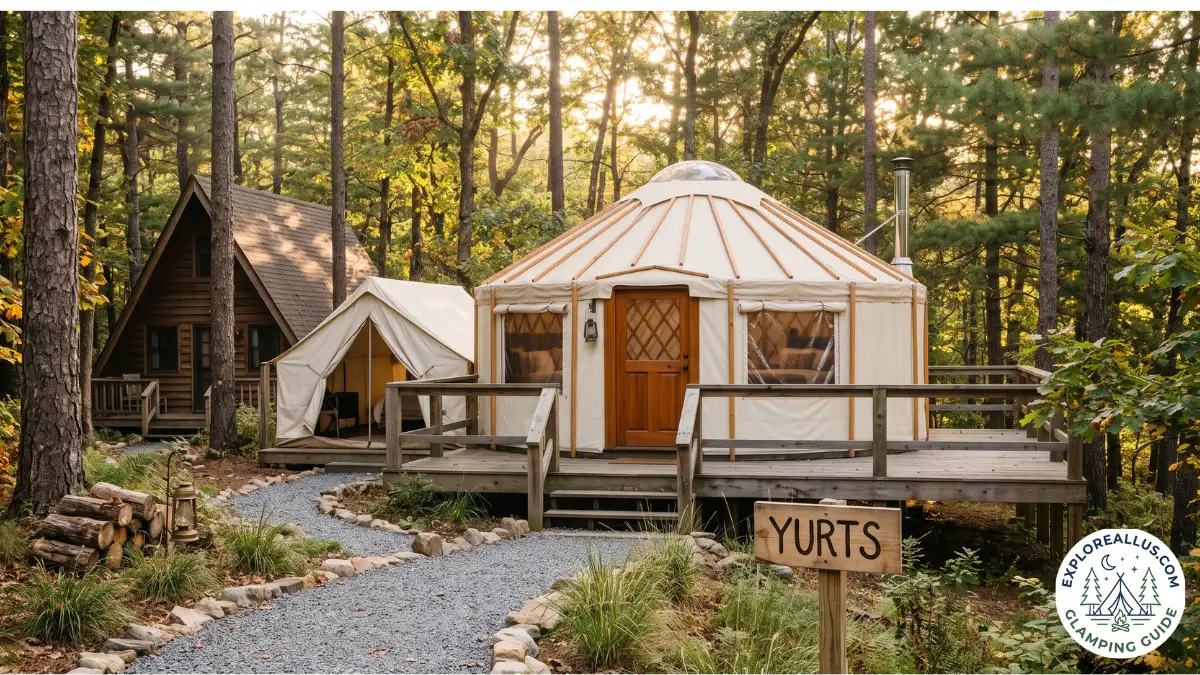
Unlike luxury private resorts that charge $300+ per night, state park systems across North America have heavily invested in yurt glamping. Oregon alone maintains over 190 state park yurts, with states like Washington, Maine, Colorado, and Georgia following suit.
State park yurts typically cost $45 to $90 per night, giving you electricity, wood or electric heat, solid bunk beds, and private outdoor decks right in the middle of coastal forests or lakeshores.
2. Built for All Four Seasons
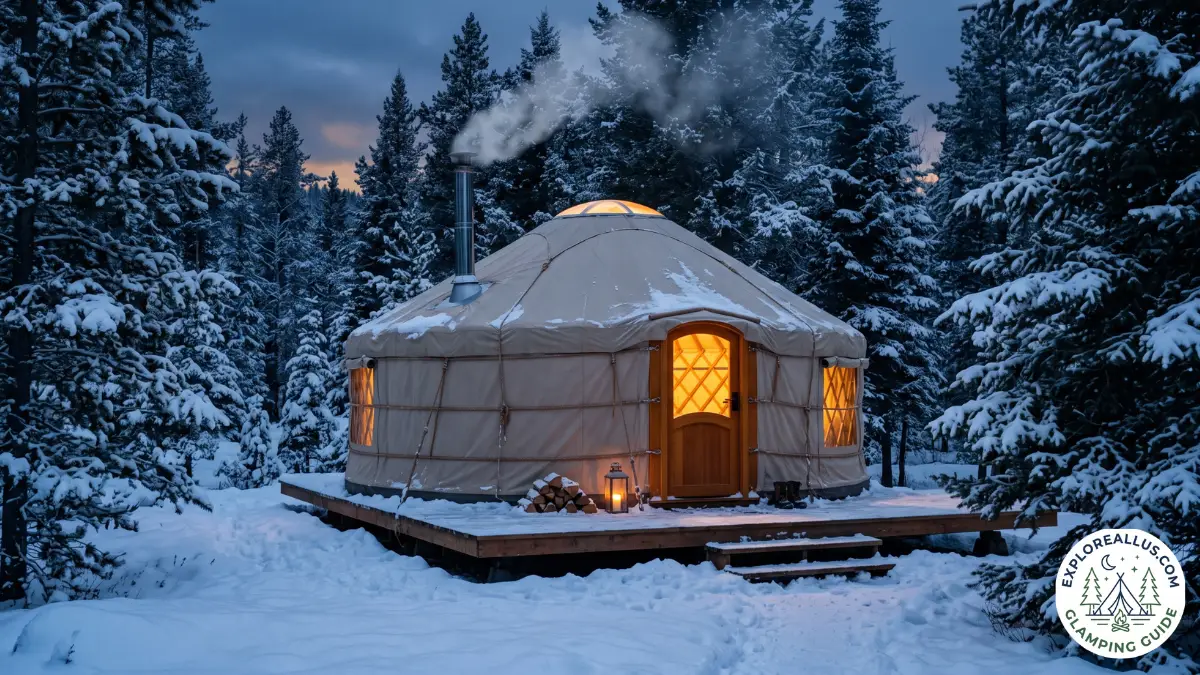
Tents can feel clammy during rainstorms or stifling hot in July, but yurts are thermal powerhouses. Most glamping yurts come equipped with wood-burning stoves, propane heaters, or electric heating/AC units. The heavy canvas and radial rafters trap heat efficiently in the winter, while opening the crown dome and side windows creates a natural cooling draft during midsummer.
3. Maximum Usable Space
Because yurts are round and lack load-bearing interior walls, the entire floor plan is usable space. You rarely feel cramped inside a 16-foot or 24-foot yurt there is plenty of room for real queen mattresses, dining tables, lounge couches, and gear storage.
4. High-End Glamour meets Authentic Camping
A yurt gives you the rustic sensation of canvas camping (hearing breezes and birdsong) combined with the physical security of a locked door, hard flooring, and weatherproof shelter.
What to Expect When You Step Inside a Yurt
Stepping inside a glamping yurt for the first time is often surprising mostly because of how spacious and high-end it feels compared to traditional canvas tents.
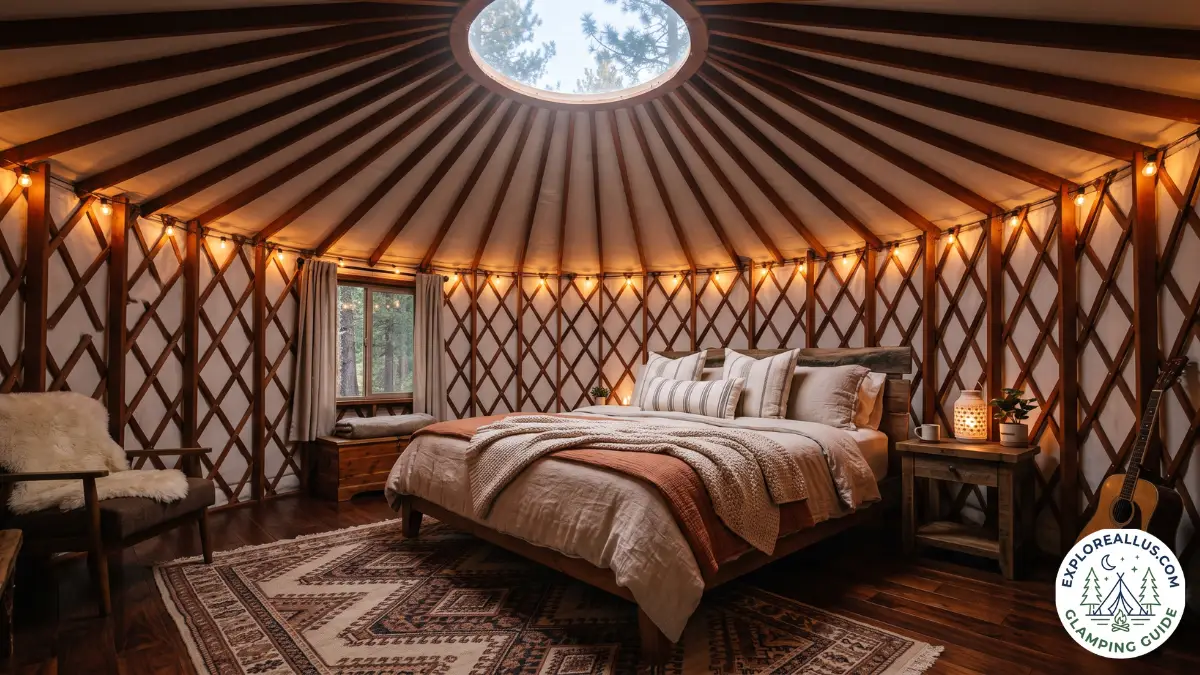
- The Dome Skylight Effect: The central skylight (tono) creates a natural spotlight during the day, filling the entire room with warm, diffused sunlight without needing overhead electric lights.
- Open, Circular Layout: Without square corners or interior dividing walls, even smaller 16-foot yurts feel open and airy. Most setups fit a full queen-sized bed, two nightstands, and a small sitting area with room to spare.
- Acoustics & Ambience: Canvas walls absorb harsh echoes while letting gently muffled sounds of nature like falling rain, wind through the trees, or distant ocean waves drift in.
- Warmth & Atmosphere: At night, string lights glowing against the exposed crisscross wooden lattice walls give yurts an undeniably cozy, cabin-like aesthetic.
Essential Yurt Packing Checklist
What you pack depends heavily on whether you are staying at a rustic state park yurt or a deluxe glamping resort. Rustic yurts provide the structure and vinyl mattress pads, but you bring the rest!
For Rustic & State Park Yurts:
- Bedding: Fitted queen/twin sheets, sleeping bags or heavy duvets, and pillows.
- Lighting: A headlamp or lantern for night walks to the bathhouse.
- Outdoor Camp Kitchen: A portable camp stove, cooler, cookware, and eating utensils (indoor cooking is usually restricted to microwave-only or outdoor grills).
- Camp Chairs: Extra seating for hanging around the outdoor fire ring.
- Eco & Waste Supplies: Trash bags, biodegradable soap, and hand sanitizer, packing out all waste ensures you follow basic Leave No Trace outdoor ethics.
For Deluxe & Luxury Yurts:
- Personal toiletries and clothing (deluxe yurts usually supply linens, towels, and kitchenware).
- Cozy indoor slippers or thick socks (shoes are typically taken off at the door to keep canvas floors clean).
Frequently Asked Questions About Yurt Glamping
How is a glamping yurt different from a standard canvas tent?
Unlike a tent held up by flexible poles, a yurt is a sturdy semi-permanent structure with a solid lattice frame, roof rafters, and a lockable wooden door. It feels like a round cabin inside, offering far more headroom, insulation, and weather protection.
Can you stay in a yurt during the winter?
Yes, winter yurt glamping is extremely popular and cozy. Modern glamping yurts are heavily insulated and equipped with wood stoves, propane heaters, or electric heat to keep the circular space warm even in freezing snowstorms.
How secure is a yurt against wildlife and bad weather?
Yurts are very safe; their aerodynamic circular shape lets strong winds pass smoothly around them without causing damage. Additionally, solid doors and heavy-duty framed window screens keep bears, raccoons, and other critters safely outside.
Do I need to bring my own bedding and cooking gear?
For state park yurts, yes you must bring your own fitted sheets, sleeping bags, pillows, and outdoor camp cooking gear. Luxury private resorts, on the other hand, provide hotel-quality linens, towels, and kitchen amenities.
Are yurts pet-friendly?
Many state parks and private glampgrounds offer designated pet-friendly yurts for a small additional nightly fee. Just be sure to filter for pet-friendly options when booking, as some locations restrict pets to protect canvas walls.